Why Does Vase Water Turn Cloudy So Quickly?
@vasenotes29
November 25, 2026 · 2 min read
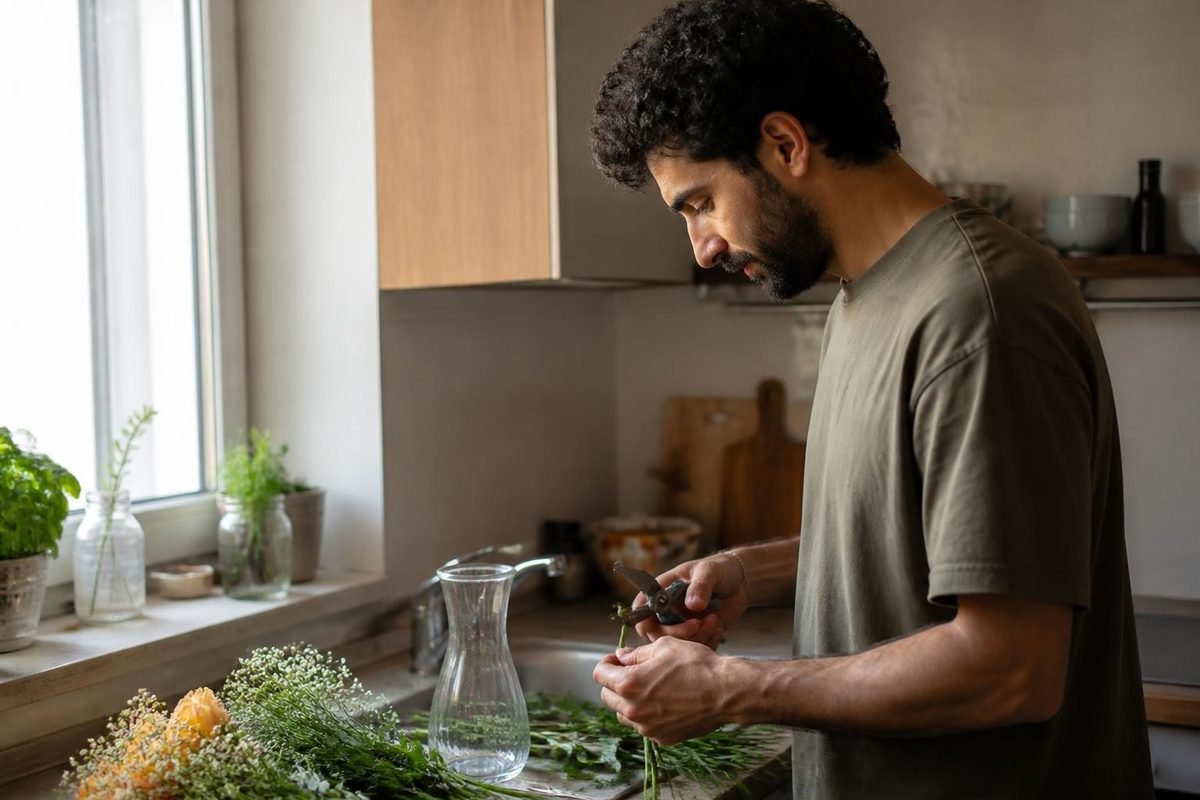
Vase water usually turns cloudy because bacteria multiply in water that contains plant material and nutrients. Leaves below the waterline, stem debris, sap, or an unclean vase can all contribute, sometimes within a day or two.
What is happening in the water
Cut flowers are still living plant tissue. Their stems release small amounts of material into the water, and any damaged leaves or petals can begin to break down. Bacteria feed on this material and can multiply until the water looks hazy.
Cloudiness is not always caused by bacteria alone. Sap from some freshly cut stems can make water look milky, while loose pollen, soil, or other particles may give it a murky appearance. Hard water can also leave a mineral film on the vase, though that is different from particles suspended in the water.
A smell, slippery stems, or a slimy vase are signs that the water needs attention. Even without those signs, fresh water gives you a clean starting point.
Why cloudiness matters to flowers
Flowers depend on their stems to draw up water. Bacteria and debris can interfere with that uptake, leaving blooms with less water than they need. The flowers may wilt sooner, even though there is still plenty of water in the vase.
That does not mean every cloudy vase will cause immediate damage. Different flowers behave differently, and their age and condition also matter. Still, clean water removes one avoidable source of trouble.
How to clear cloudy vase water
Do not just top up a cloudy vase. Emptying it gives you a chance to remove the film and debris that fresh water alone can leave behind.
- Take the flowers out and set them somewhere cool while you clean the vase.
- Pour out the old water. Wash the vase with soap and warm water, then rinse it thoroughly.
- Remove any leaves that would sit below the waterline, along with loose or decaying plant material.
- Trim a little from the bottom of each stem with clean, sharp scissors or a knife.
- Fill the vase with fresh water and add flower food according to its packet directions, if you have it. Return the flowers to the vase.
Keeping the water clearer
Check the water daily and change it when it becomes cloudy. Wash the vase and trim the stems again as needed. Keeping fallen petals and submerged leaves out of the water reduces the material that can break down there.
Use flower food as directed rather than adding extra sugar. Too much sugar can encourage bacterial growth, and a homemade mixture is not necessarily a substitute for a prepared flower food.
Fresh water will not make cut flowers last forever. It does, however, give their stems a better chance to keep drinking while you enjoy them.
A good companion read: https://greensys2019.org/post-harvest-care-why-the-first-hours-decide-a-flowers-vase/